AI Workflows
Turning repetitive creative production into smarter, scalable systems
Working across multiple brands, channels and media suppliers means even a single campaign can generate hundreds of individual artwork variations. Different dimensions, formats, disclaimers and technical specifications all need to be interpreted correctly, built consistently and checked carefully before anything is released.
While much of this work is essential, the traditional production process was repetitive, time-consuming and vulnerable to human error. I saw an opportunity to use AI, automation and design systems to reduce the manual workload, allowing designers to spend less time rebuilding artwork and more time focusing on creative thinking, quality and brand impact.
Role
Design Lead, workflow strategy, automation design, systems thinking, team enablement
Scope
AI-assisted production, Figma tooling, artwork automation, specification handling, quality assurance and scalable campaign delivery
The Challenge
Campaign briefs often arrived with complex spreadsheets containing dozens of media placements across multiple suppliers. Designers needed to manually review the specifications, identify duplicate sizes, organise deliverables and create each artwork variation individually.
Quality assurance created another significant layer of work. Every file needed to be checked against the original specification, including dimensions, format requirements, legal copy and terms and conditions. As campaign volumes increased, this process became difficult to scale without adding more production time and pressure to the team.
The goal was not simply to make design faster. It was to create a more reliable workflow that improved accuracy, reduced unnecessary repetition and remained intuitive enough for the wider design team to use confidently.
Building the workflow
I designed and developed a series of AI-assisted production tools that connected campaign specifications directly to the creative process.
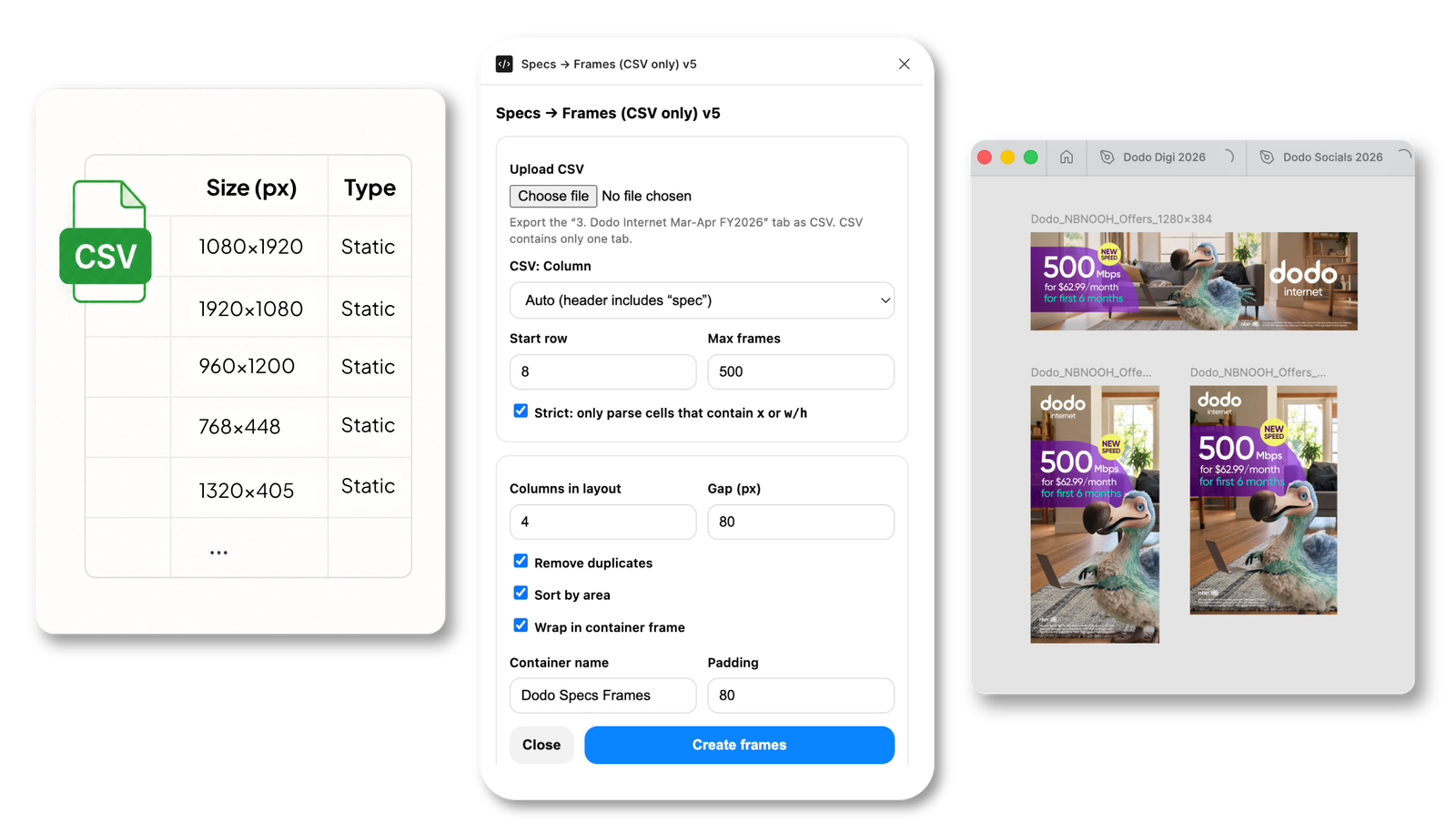
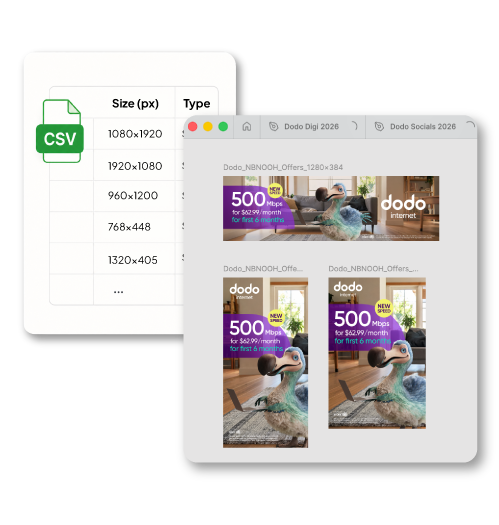
A custom Figma workflow was created to interpret supplier spreadsheets, identify and remove duplicate dimensions, categorise placements and generate an organised set of correctly sized frames. Instead of manually creating and labelling every variation, designers could begin with a structured production file that reflected the requirements of the campaign.
I also developed automated artwork-generation processes for high-volume formats such as out-of-home advertising. These systems could adapt approved campaign elements across numerous placements while maintaining layout rules, branding and hierarchy—replacing a large amount of repetitive Illustrator production.
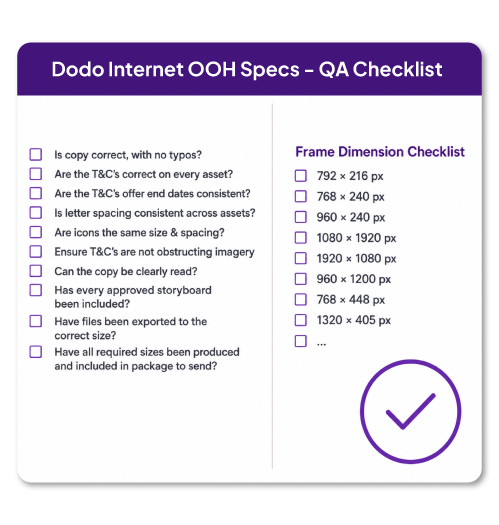
To strengthen quality control, I introduced automated PDF checks that compared completed artwork against supplier requirements. The workflow helped identify incorrect dimensions, missing or inconsistent terms and conditions, and other common production issues before files progressed to final delivery.
Designing for people, not just efficiency
The success of the project depended on more than the tools themselves. The workflows needed to be understandable, flexible and easy to adopt within an existing creative team.
I worked closely with designers to understand where time was being lost, where mistakes were most likely to occur and which parts of the process still required human judgement. The tools were then built around the way the team already worked rather than forcing designers into an entirely new system.
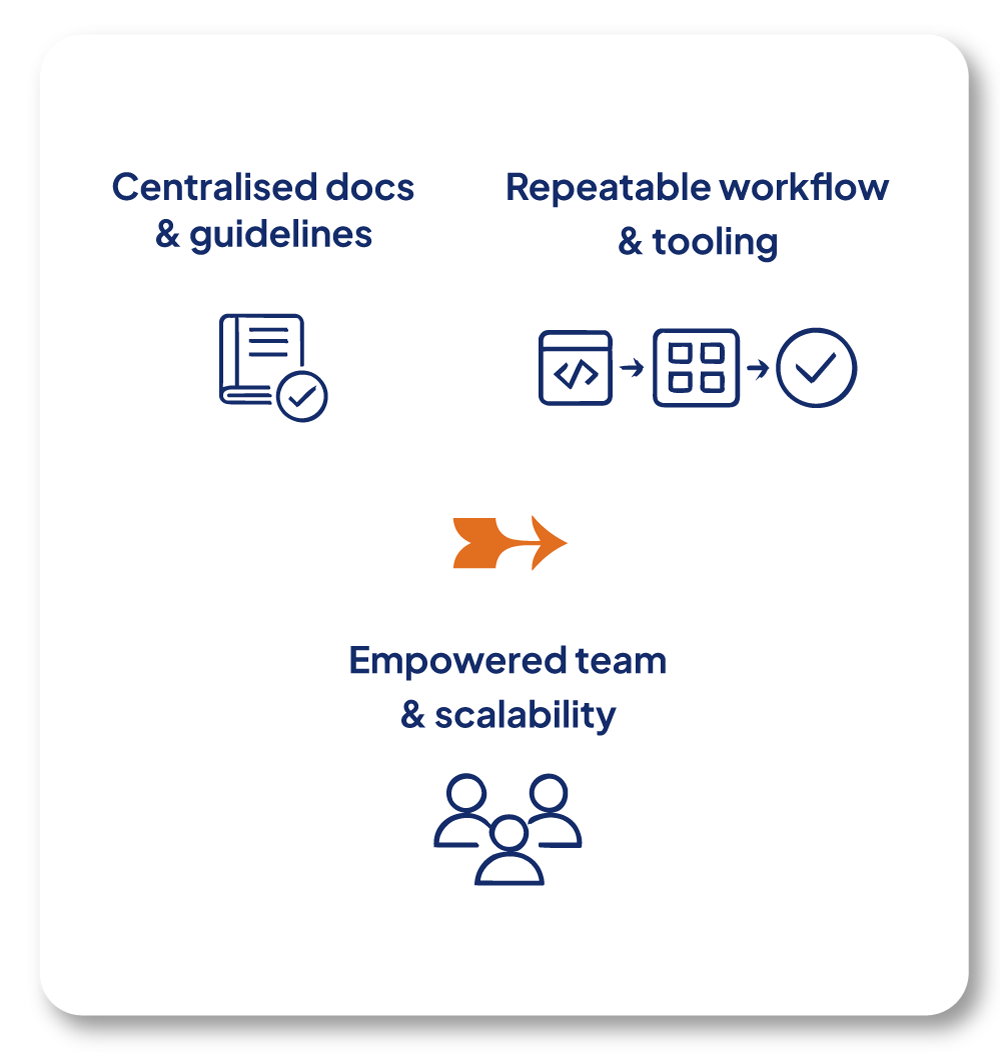
Clear documentation, demonstrations and ongoing support helped embed the workflows into everyday production. This allowed team members with different levels of technical confidence to benefit from automation while remaining in control of the final creative output.
The impact
The new workflows significantly reduced the time required to prepare, produce and quality-check large campaign suites. Repetitive production tasks that previously required extensive manual setup could be completed in a fraction of the time, while automated checks created an additional layer of confidence before delivery.
More importantly, the project changed how the team approached creative operations. Automation was no longer viewed as something separate from design, it became a practical tool for protecting quality, reducing pressure and creating more space for higher-value creative work.
By combining design leadership, systems thinking and emerging technology, I created a scalable production model that supported faster delivery without compromising brand consistency or attention to detail.